
Purpose Of Supplier Evaluation Explained, The 5 Reasons It Matters
The purpose of supplier evaluation is to reduce supply risk and improve buying outcomes by comparing suppliers against consistent criteria before and after award. Teams run into supplier evaluation because price alone rarely predicts delivery, quality, compliance, or responsiveness once orders start moving.
- Supplier evaluation is a business control used both before award (selection) and after award (performance management).
- The five core purposes map to outcomes: risk reduction, quality consistency, total cost control, capacity assurance, and continuous improvement.
- A simple weighted scorecard (criteria + weights + minimum thresholds) is usually enough to make decisions repeatable and auditable.
What supplier evaluation means before and after award
Supplier evaluation is the structured process of scoring and reviewing a supplier against defined criteria so sourcing decisions are consistent, explainable, and aligned to business risk. In practice, there are two moments where it shows up in the supplier lifecycle: pre-award (who should we start or expand with) and post-award (should we keep, develop, or exit this supplier).
Pre-award evaluation is selection and due diligence
Pre-award evaluation helps you decide whether a supplier is worth onboarding, issuing an RFQ to, or awarding business to. The output is typically a shortlist decision plus documented reasoning, for example: “Supplier A passes compliance and capacity thresholds and scores 82/100 overall.” If your team already follows a process for how to find a supplier for your product, evaluation is the step that turns that list of names into a defendable award decision.
Post-award evaluation is performance management
Post-award evaluation checks whether the supplier is meeting what was promised and where corrective actions are needed. The purpose of supplier evaluation here is not to “grade” for its own sake; it is to trigger action: a supplier development plan, a quality containment step, a revised forecast commitment, or a re-sourcing decision. Typical inputs are on-time delivery, defect rates, responsiveness, and adherence to agreed change-control.
Where evaluation fits in a normal sourcing workflow
- Supplier discovery: build a longlist from referrals, directories, trade data, or internal history. (If you are formalizing this step, see how to look for suppliers.)
- Pre-screen: remove suppliers that fail hard requirements (product fit, geography, certifications, MOQ, legal constraints).
- Evaluation and scoring: apply criteria and weights; run sample, audit, and reference checks as needed.
- Award and onboarding: contract, initial quality plan, PPAP or equivalent controls where relevant.
- Ongoing evaluation: quarterly or per-lot review depending on risk.
The five purposes of supplier evaluation and the business outcomes behind them
The purpose of supplier evaluation is easiest to use when each evaluation criterion ties to a specific business outcome you care about. Below are five practical purposes that show up across most categories, plus a simple example for each so your scorecard does not become theoretical.
1) Reduce supply risk before it becomes a disruption
Outcome: fewer line stops, fewer expedited shipments, fewer surprise supplier failures. Risk-focused evaluation checks financial stability signals (where available), capacity realism, sub-tier dependencies, and business concentration (for example, one customer being most of their revenue can be a risk).
- Example: a supplier offers a low unit price but relies on a single finishing subcontractor; you score “sub-tier resilience” low unless they can qualify a backup.
2) Protect quality and spec compliance
Outcome: lower defect cost, fewer returns, fewer rework loops. Quality evaluation looks at capability, process control, inspection routines, and how the supplier handles nonconformities. In our experience working with mixed maturity suppliers, the biggest differentiator is not whether issues happen, but whether the supplier can contain and correct them without repeated escalation.
- Example: two suppliers pass initial samples, but only one can show a stable incoming inspection plan for critical materials; that supplier scores higher on “control plan maturity.”
3) Control total cost, not just piece price
Outcome: fewer hidden costs from freight, packaging, yield loss, and change orders. Evaluation should include cost drivers like lead time volatility, packaging requirements, payment terms, and the likelihood of engineering changes.
- Example: Supplier B is 4% cheaper on price but needs custom packaging and has longer lead times; when you include packaging and inventory carrying impact, Supplier A wins on total cost.
4) Confirm capacity and delivery reliability
Outcome: fewer late deliveries and fewer firefights around schedule changes. Delivery evaluation should check capacity claims against evidence (equipment, shifts, historical volumes) and the supplier’s planning discipline.
- Example: a supplier quotes a 30-day lead time but cannot explain how they schedule bottleneck processes; you score “planning credibility” low and require a pilot order.
5) Drive continuous improvement and supplier development
Outcome: stronger suppliers over time and fewer re-sourcing events. This is the post-award side of the purpose of supplier evaluation: you use the scorecard to agree improvement goals, track them, and decide whether investment is paying off.
- Example: a supplier repeatedly misses an “on-time delivery” threshold; you create a corrective action plan with dates, owners, and a re-evaluation in 60 days.
The 10 Cs plus the core criteria teams actually measure
A practical supplier evaluation framework is a short set of criteria that covers capability, risk, and collaboration without duplicating effort. One simple way to structure it is the “10 Cs” as buckets, then pick the handful you will actually score for your category.
The 10 Cs as plain-English buckets
- Competence: technical ability to make the product to spec
- Capacity: ability to meet volume and ramp changes
- Consistency: stable output over time, not just a good sample
- Compliance: legal, regulatory, and customer requirements
- Cost: total cost drivers and commercial terms
- Control: process control, inspection, traceability, documentation
- Continuity: resilience to disruptions and business continuity planning
- Communication: responsiveness, clarity, escalation behavior
- Culture: fit on ethics, transparency, improvement mindset
- Collaboration: willingness to solve problems jointly, share data, run pilots
Core criteria most teams score (and what “good” evidence looks like)
To keep evaluation usable, most teams score 6 to 10 criteria and keep the rest as notes. A starter set that works for many procurement teams:
- Quality performance: defect trend, corrective action closure, sample repeatability
- On-time delivery: shipment reliability, lead time stability, schedule adherence
- Technical capability: equipment/process match, workmanship, engineering support
- Capacity and scalability: ability to add shifts, manage peaks, manage bottlenecks
- Compliance and ESG basics: required certifications, audits, documented policies
- Commercial terms: payment terms, MOQ flexibility, tooling ownership clarity
- Communication: response time, clarity, documentation quality
- Risk profile: sub-tier dependencies, geographic risk, customer concentration
Which criteria matter most by supplier type
Weights should reflect what can hurt you most for that category. As a quick guide:
- Commodity or low-complexity parts: delivery reliability and total cost often dominate, with quality as a threshold.
- Critical components: quality, process control, and continuity typically carry the most weight.
- New product introduction suppliers: technical capability, collaboration, and change-control discipline matter more than unit price early on.
How to choose and weight criteria without guesswork
A lightweight weighting method is to assign higher weight to the criteria that would cause the largest business impact if the supplier fails. The goal is not mathematical perfection; it is to make the tradeoffs explicit so two stakeholders do not reach opposite conclusions from the same facts.
Step 1: Set hard “gates” before you score
Gates are pass/fail requirements that prevent a high score from masking a deal-breaker. Common gates include: required certifications, legal compliance, ability to meet minimum capacity, and agreement to key contract terms. We initially assumed scoring alone would keep decisions consistent, but audit debriefs showed that adding two to three gates eliminated most “but they scored well” arguments later.
Step 2: Pick 6 to 10 scored criteria and define the scale
Use a simple 1 to 5 scale where each number has a definition. Example for on-time delivery:
- 5: reliable evidence of stable on-time performance and credible planning
- 3: some evidence, but gaps in planning or inconsistent performance
- 1: no credible evidence or repeated misses during trials
Step 3: Use three default weighting templates
Start with a template based on supplier criticality, then adjust. The templates below sum to 100%.
- Low-risk supplier: Cost 30%, Delivery 25%, Quality 20%, Communication 10%, Compliance 10%, Risk 5%
- High-risk supplier: Quality 30%, Delivery 20%, Compliance 15%, Control 15%, Capacity 10%, Risk 10%
- Strategic supplier: Quality 25%, Capacity 20%, Collaboration 15%, Continuity 15%, Delivery 15%, Cost 10%
Step 4: Define thresholds and decision rules
Thresholds prevent a “good average” from hiding a bad failure mode. Two practical rules:
- Minimum overall score: for example 75/100 to award.
- Minimum category score: for example at least 3/5 in Quality and Compliance for any award.
A worked supplier scorecard example you can copy into Excel or PDF
A worked example makes the purpose of supplier evaluation tangible because it shows how scoring turns into a decision. The example below uses a 1 to 5 score and a high-risk weighting template, which is common when quality or compliance failures are costly.
Form fields to include on the scorecard
- Supplier name:
- Product / category:
- Evaluation type: Pre-award or Post-award
- Period covered: dates
- Evaluators: sourcing, quality, engineering, operations
- Gates checked: yes/no with notes
- Decision: approve, approve with action plan, reject, re-evaluate
Example scoring table
Scenario: evaluating Supplier X for a critical, quality-sensitive component.
| Criterion | Weight | Score (1-5) | Weighted points | Evidence notes |
|---|---|---|---|---|
| Quality performance | 30% | 4 | 1.20 | Sample repeatability good; clear corrective action format |
| Delivery reliability | 20% | 3 | 0.60 | Lead time quoted stable, but limited history |
| Compliance readiness | 15% | 5 | 0.75 | Required documents provided and reviewed |
| Process control | 15% | 3 | 0.45 | Inspection plan exists; traceability partial |
| Capacity and scalability | 10% | 4 | 0.40 | Can add shift; bottleneck identified with mitigation |
| Risk profile | 10% | 2 | 0.20 | Heavy reliance on a single sub-tier material source |
| Total (max 5.00) | 3.60 | Equivalent to 72/100 |
Decision logic from the worked example
- Overall score: 72/100, below a 75/100 award threshold.
- Category thresholds: Risk profile scored 2/5; if Risk has a minimum of 3/5, Supplier X cannot be approved yet.
- Action: “Approve with action plan” for a pilot, contingent on qualifying an alternate sub-tier source and completing traceability improvements by an agreed date.
When to re-evaluate suppliers and what to do after the scorecard
Supplier re-evaluation is necessary when business conditions change or performance signals drift, because last year’s score does not protect next quarter’s deliveries. A simple cadence and escalation path keeps evaluation from becoming a spreadsheet that no one uses.
Re-evaluation cadence that matches risk
- Strategic or high-risk suppliers: quarterly review, plus event-based reviews.
- Medium-risk suppliers: semiannual review.
- Low-risk suppliers: annual review, or when a major change occurs.
Event-based triggers you can standardize
- Quality escape to customer, repeated nonconformance, or rising defect trend
- Two consecutive late deliveries, or a significant lead time change
- Material or process change, factory move, ownership change
- New regulatory requirement or customer audit finding
What to do when a supplier misses the threshold
The purpose of supplier evaluation is only realized when the scorecard triggers a defined response. A practical escalation ladder:
- Containment: tighten incoming inspection, segregate lots, increase sampling for a limited time.
- Corrective action: 5-Why or similar root-cause work with due dates and owners.
- Commercial controls: adjust payment milestones, add chargeback terms where appropriate, limit volume until stability returns.
- Supplier development or exit: training, process changes, or re-sourcing if risk remains high.
After running multi-stakeholder supplier reviews, the pattern was clear: corrective actions stick better when the next re-evaluation date is booked during the review, not left as an open task.
Commonly confused concepts to clarify
- Supplier evaluation vs supplier audit: evaluation is the decision framework; an audit is one input that provides evidence on capability and compliance.
- Supplier evaluation vs supplier selection: selection is the decision moment; evaluation is the scoring and review process that supports selection.
- Supplier evaluation vs supplier performance management: performance management is the ongoing system; evaluation is the periodic measurement and interpretation step inside it.
When supplier evaluation is useful and when it may be overkill
- Most useful: new suppliers, critical parts, regulated categories, suppliers with volatile lead times, and any time you must justify decisions to quality or finance.
- Sometimes unnecessary: true spot buys with low consequence of failure, or indirect items where a simple approved-vendor list and price check is enough.
| Supplier type | Recommended approach | Minimum gates | Typical review cadence |
|---|---|---|---|
| Low-risk / commodity | 6-criteria scorecard, cost and delivery weighted | Legal compliance, basic quality agreement | Annual |
| High-risk / quality-critical | 8-10 criteria, strong thresholds on quality and compliance | Compliance, capacity, change-control acceptance | Quarterly |
| Strategic / long-term partner | Scorecard plus joint improvement plan | Continuity planning, governance cadence | Quarterly + event-based |
FAQ
If you want a structured way to research suppliers, track quality signals over time, and keep evaluations consistent across your team, Ant Sourcing can help by bringing supplier context and quality control tracking into one place so your scorecards stay current without replacing human judgment.
How To Find The Best Suppliers, A Practical Workflow and Scorecard
Learn how to find the best suppliers using a repeatable checklist, vetting steps, and a simple weighted scorecard for objective comparison.
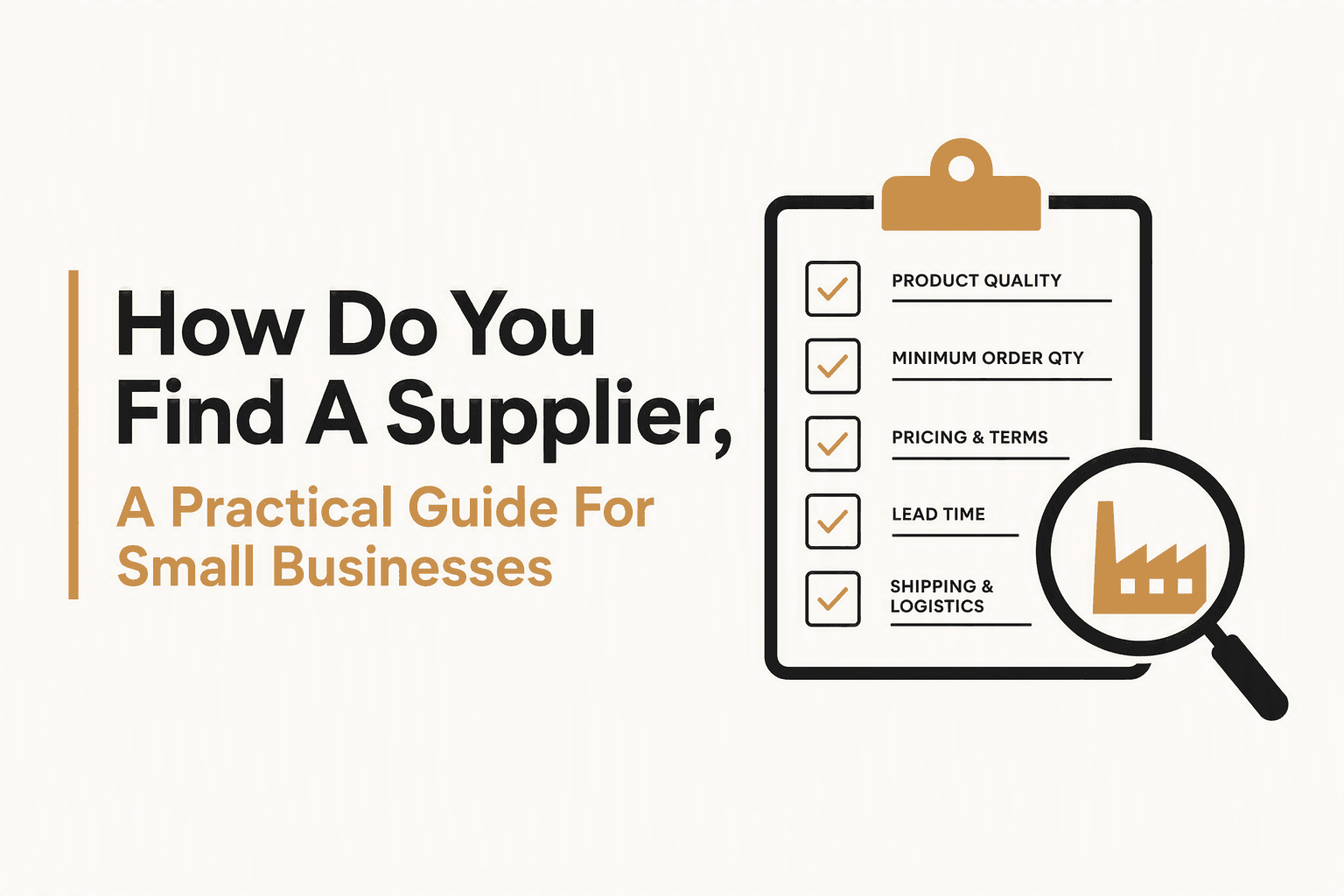
How Do You Find A Supplier, A Practical Guide For Small Businesses
Learn how do you find a supplier with a simple SOP: set requirements, search channels, email RFQs, compare quotes, verify, and place your first order.
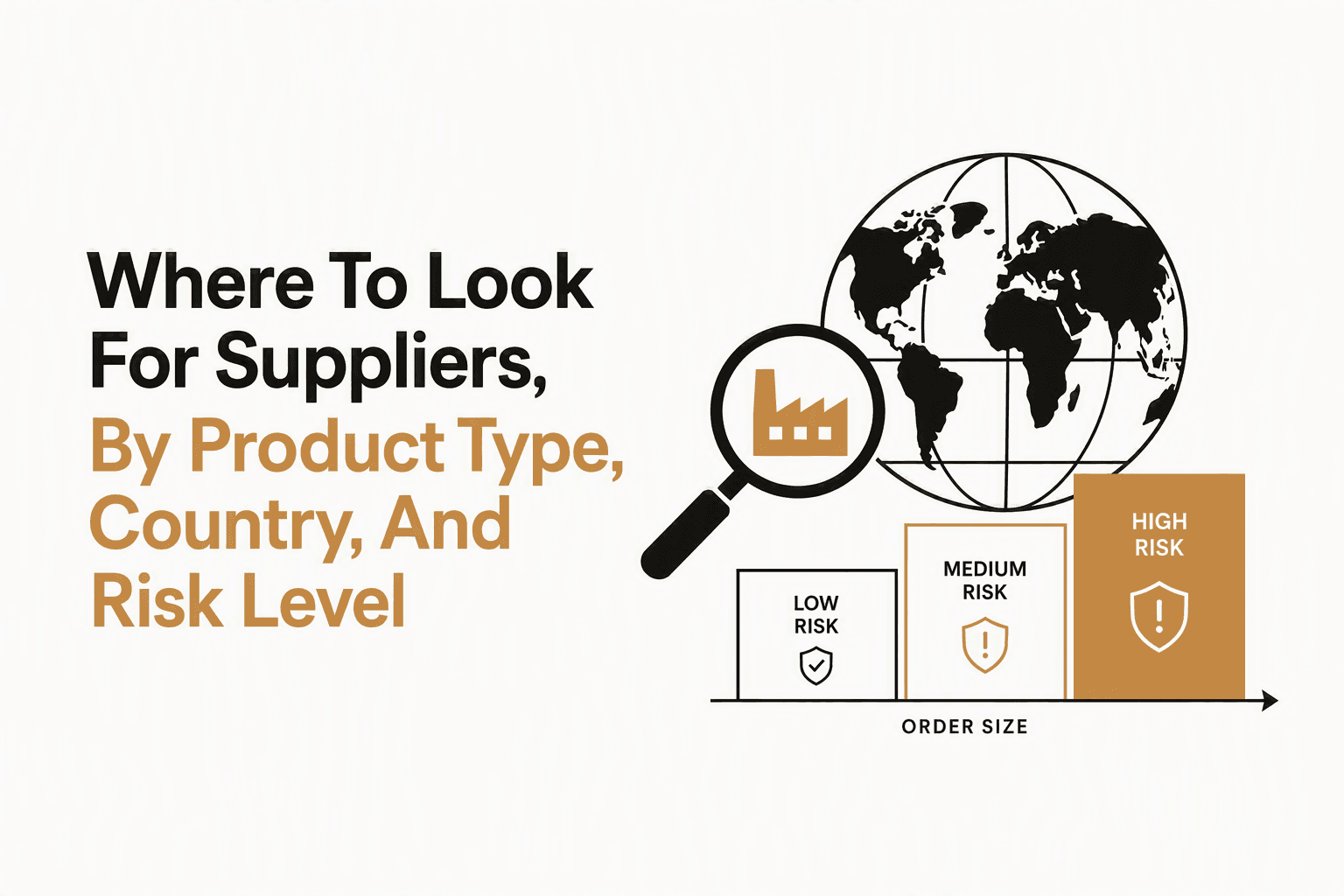
Where To Look For Suppliers, By Product Type, Country, And Risk Level
Learn where to look for suppliers by product type, country, and risk level, plus a practical checklist to research and shortlist partners fast.