
Research Suppliers Explained, Benefits, Risks, And How To Choose One
Research suppliers are companies or individuals you pay to identify, screen, and organize potential factories or trading partners so your team can decide who to contact and audit first. Teams use research suppliers when the cost of a bad supplier choice is high and internal time, language, or market access is limited, especially when sourcing from Vietnam.
- Use research suppliers when you need a shortlist you can defend with evidence, not just names and emails.
- Evaluate them with a simple scorecard based on proof requests, process, and incentives, not sales promises.
- Run a documented workflow from brief to shortlist to sampling to QC handoff so you stay in control.
What Are Research Suppliers and When Do You Need Them?
Research suppliers provide structured supplier intelligence and shortlist building, not manufacturing capacity and not full end-to-end procurement ownership. In practice, they sit between a Google search and a full sourcing agent: they gather company details, product fit signals, trade activity clues, and contact paths so your team can prioritize who is worth outreach.
What they do (scope you can hold them to)
- Translate your brief into a supplier search plan: product category, materials, construction, target price band, compliance needs, and target shipping terms.
- Build a longlist from databases, trade records, factory clusters, references, and local networks.
- Pre-screen and document each candidate with consistent fields so you can compare apples to apples.
- Deliver a shortlist with evidence attached (links, documents, notes, and “unknowns”).
What they are not
- Not a manufacturer: they typically do not own the factory or production line.
- Not automatically an agent: some will offer negotiation or order follow-up, but that is a different service with different incentives.
- Not a guarantee of compliance or quality: research is a filter, not proof. Final verification still needs direct confirmation and, for many categories, on-site checks.
Common triggers for using research suppliers
- New country, new category: you are sourcing from Vietnam for the first time, or moving from soft goods into furniture or wood products where construction and materials vary.
- Lead-time pressure: you need a credible shortlist in days, not weeks, and cannot afford dead-end outreach.
- High risk SKU: higher-value items (like cabinets or dining sets) where defects are expensive to rework, ship back, or discount.
- Internal constraints: limited Vietnamese language capability, limited audit capacity, or no internal supplier database.
Why Companies Use Research Suppliers, Benefits and Tradeoffs
Research suppliers are used to reduce search time and avoid preventable supplier-risk mistakes by turning “unknown companies” into a comparable, evidence-backed shortlist. The real value is not the number of supplier names, but the quality of the decision you can make with the information provided.
Benefits you can measure in your workflow
- Faster to a usable shortlist: you start outreach with 5 to 10 candidates that match your brief, instead of emailing 30 and learning basics by trial and error.
- Fewer avoidable dead ends: early checks on basic fit (materials, category, export markets, customer types) reduce the “wrong factory” problem.
- More consistent comparison: standardized fields force clarity on what is known vs unknown, which helps cross-functional alignment with QA and finance.
- Local market access: research suppliers may know regional manufacturing clusters (for example, specific provinces where certain wood furniture capabilities are concentrated).
Tradeoffs and hidden costs to plan for
- Incentive risk: if they are paid per introduction, the shortlist can bias toward “easy to contact” suppliers rather than “best fit.”
- Data can be stale: shipment and product mix can change quickly; any dataset needs a timestamp and a refresh plan.
- Coverage gaps: smaller factories, subcontractors, or newer exporters may not show up in some databases.
- False confidence: a polished profile can lead teams to skip direct confirmation and audits.
What surprised our team in real sourcing projects
What surprised our team was how often “capable on paper” suppliers failed basic commercial alignment, like MOQ flexibility, packaging specs, or willingness to share process documentation. That is why research suppliers should be judged on whether they surface unknowns early, not whether they promise certainty.
How To Evaluate Research Suppliers Using a Simple Scorecard
A simple scorecard is the fastest way to choose between research suppliers because it forces proof requests and makes gaps visible before you pay for a long engagement. You are evaluating their process and evidence quality as much as the suppliers they find.
Scorecard structure (100 points total)
- Brief quality and discovery (20): Do they ask clarifying questions that affect supplier selection (materials, construction, tolerances, target markets, labeling, testing)?
- Evidence attached to each candidate (30): Do profiles include traceable sources, timestamps, and clear “unknown” fields?
- Verification approach (20): Do they separate “claimed by supplier” vs “supported by documents/records”?
- Shortlist relevance (20): Are the top candidates genuinely aligned to your must-haves, not just similar categories?
- Operating cadence and documentation (10): Do they deliver in a shared format your team can reuse (sheet, database, or structured profile), with version control?
Proof requests that separate serious operators from list-sellers
- Two sample supplier profiles (redacted) showing the exact fields they capture.
- Source transparency: where each data point comes from (supplier-provided, public registry, trade activity, third-party documents).
- Timestamping: when the information was last confirmed.
- Rejection log: at least 5 examples of suppliers they excluded and why (capacity mismatch, no export experience, inconsistent documentation, etc.).
- Escalation path: how they handle conflicting information and what they do when a supplier refuses to share key documents.
Red flags (practical, not theoretical)
- They will not show sample outputs before contracting.
- They cannot explain how they avoid conflicts of interest, especially if they also earn commissions from factories.
- They promise “fully verified” suppliers without defining verification (documents, audit, trade records, references).
- They treat every supplier as equal and do not rank by your must-haves.
Confirm directly with the supplier (do not outsource these)
- Legal entity details and factory address (match documents to location and operating site).
- Production scope: what is made in-house vs outsourced (finishing, upholstery, CNC, metal parts, packaging).
- MOQ, lead times, and capacity assumptions for your exact SKU and packaging.
- Quality system and defect handling: how they record nonconformities, rework rules, and acceptance criteria.
A Practical Workflow for Managing Research Suppliers Without Losing Control
A documented workflow keeps research suppliers accountable and prevents your team from outsourcing critical decisions like specs, acceptance criteria, and supplier approval. The goal is simple: every step produces an artifact you can reuse, audit, and hand off to QC.
Stage 1: Write a brief that produces comparable supplier data
- Define non-negotiables: materials (e.g., acacia vs rubberwood), construction requirements, finish constraints, and packaging limits.
- Set a target order profile: expected annual volume, initial pilot quantity, and forecast ranges.
- List “must document” items: factory address, in-house processes, export markets, and references if available.
- Create a single SKU sheet with drawings, tolerances, and critical-to-quality points.
Stage 2: Longlist and filter with decision gates
- Gate A (fit): category match, material capability, and willingness to quote with your packaging and labeling requirements.
- Gate B (export readiness): evidence of export activity, shipment history where available, and ability to provide export documents.
- Gate C (quality readiness): can they describe their process controls and accept third-party inspections?
Stage 3: Shortlist package you should receive
- 5 to 10 suppliers ranked with reasons tied to your brief.
- One-page profile per supplier with “known,” “claimed,” and “unknown” clearly labeled.
- Open questions list for your team to confirm directly during first calls.
Stage 4: Sampling and QC handoff (where control is often lost)
- Sample plan: what the sample must prove (finish durability, joinery, packaging drop tolerance) and how you will record results.
- Acceptance criteria: define what “pass” means before ordering, including defect classification if you use one.
- Inspection readiness: confirm the supplier can support pre-shipment inspections and corrective actions.
After running multiple supplier shortlists, the pattern was clear: teams that document the “why” behind each gate make faster decisions and avoid re-litigating the same supplier questions every quarter. That documentation also makes it easier to onboard new teammates without resetting the process.
Common Mistakes Buyers Make and How To Avoid Them
Common mistakes with research suppliers come from unclear ownership, weak specs, and skipping direct confirmation steps that only the buyer can enforce. Each mistake below includes a concrete fix you can apply immediately.
Mistake 1: Paying for names instead of decisions
- What it looks like: a spreadsheet of 50 factories with minimal fields and no ranking.
- Fix: pay for a shortlist deliverable with required fields, evidence, and a rejection log. Tie acceptance to your scorecard.
Mistake 2: Letting “claimed capabilities” pass as verified
- What it looks like: “we can do oak, acacia, rubberwood” with no product examples or process details.
- Fix: require photos or documents that show relevant production steps and finished goods examples, then confirm details on a call and in a quote.
Mistake 3: Not defining quality requirements early
- What it looks like: sampling is treated as a “nice to have,” and inspection criteria are decided after the PO.
- Fix: put critical-to-quality points into the brief and require the supplier to confirm understanding in writing before sampling.
Mistake 4: Misaligned incentives and hidden commissions
- What it looks like: the same suppliers keep appearing even when they do not match your brief.
- Fix: ask how they are paid, and require disclosure of referral fees. If they earn commissions, insist on a separate research fee so you can compare outcomes.
Quick Checklist To Start Your Supplier Research This Week
A practical checklist makes research suppliers useful because it turns your evaluation into a repeatable sequence with clear decision gates. Use the checklist below during briefing, shortlist review, and the first supplier calls.
Stage 1: Briefing checklist (before you engage research help)
- Define the product family and SKU priority (what must be sourced first vs later).
- List must-have materials and acceptable substitutes. Unclear material rules create quotes you cannot compare.
- Specify construction and finish constraints (for furniture: joinery type, coating type, color tolerance approach).
- State target Incoterms and destination market so export documentation expectations are clear.
- Set a sample budget and timeline to avoid endless “research” with no decision.
Stage 2: Candidate profile checklist (what each supplier entry must include)
- Company legal name and address (mark as claimed vs documented).
- Factory vs trading company classification and reasoning.
- Product and material fit with 2 to 3 example SKUs or photos.
- In-house processes vs outsourced steps. Confirm directly with the supplier because outsourcing affects lead time and quality control.
- Export experience signals: target markets served, shipping documents readiness, and any available trade activity indicators.
- Commercial basics: indicative MOQ, lead time range, payment term expectations (flag unknowns).
Stage 3: First-call checklist (confirm directly with the supplier)
- Confirm capability for your exact SKU, not the category.
- Ask what could cause delays (material lead time, finishing bottlenecks, packaging supply).
- Confirm sample plan: what they will send, how they label, and how they handle changes.
- Confirm QC cooperation: willingness to support inspections, rework rules, and corrective actions.
- Request key documents only if relevant to your category and market. Do not assume any certification is required unless your product or customer requires it.
Stage 4: Decision gate checklist (approve, hold, or reject)
- Approve to sample only if must-have requirements are confirmed in writing.
- Hold if critical unknowns remain (true factory location, outsourcing scope, MOQ mismatch).
- Reject if documentation is inconsistent, communication is evasive, or they refuse reasonable QC expectations.
Stage 5: Review and reuse (turn research into a system)
- Store profiles with timestamps so your next project starts with current data.
- Record outcomes: quote quality, sample pass/fail, lead time accuracy.
- Update your scorecard weights based on what actually predicted success for your category.
| Decision point | Minimum evidence to proceed | Who owns it | Common failure mode |
|---|---|---|---|
| Engage research supplier | Sample outputs + scorecard agreement | Buyer / sourcing lead | Paying for a list without evidence |
| Shortlist approval | Ranked 5 to 10 suppliers with known/unknown fields | Sourcing + QA | No rejection log, no decision rationale |
| Approve to sample | Must-haves confirmed in writing by supplier | Sourcing lead | Sampling before specs are frozen |
| Approve to PO | Sample results + QC plan + commercial terms agreed | Sourcing + QA + finance | QC expectations set after order |
FAQ
If you want to apply this checklist with Vietnam-focused data and a structured place to store supplier profiles, Ant Sourcing can help with Vietnam supply network access, supplier documentation, and quality control workflows so your team can move from research to repeatable execution. Consider booking a demo to see whether the approach fits your sourcing process.
How To Find The Best Suppliers, A Practical Workflow and Scorecard
Learn how to find the best suppliers using a repeatable checklist, vetting steps, and a simple weighted scorecard for objective comparison.
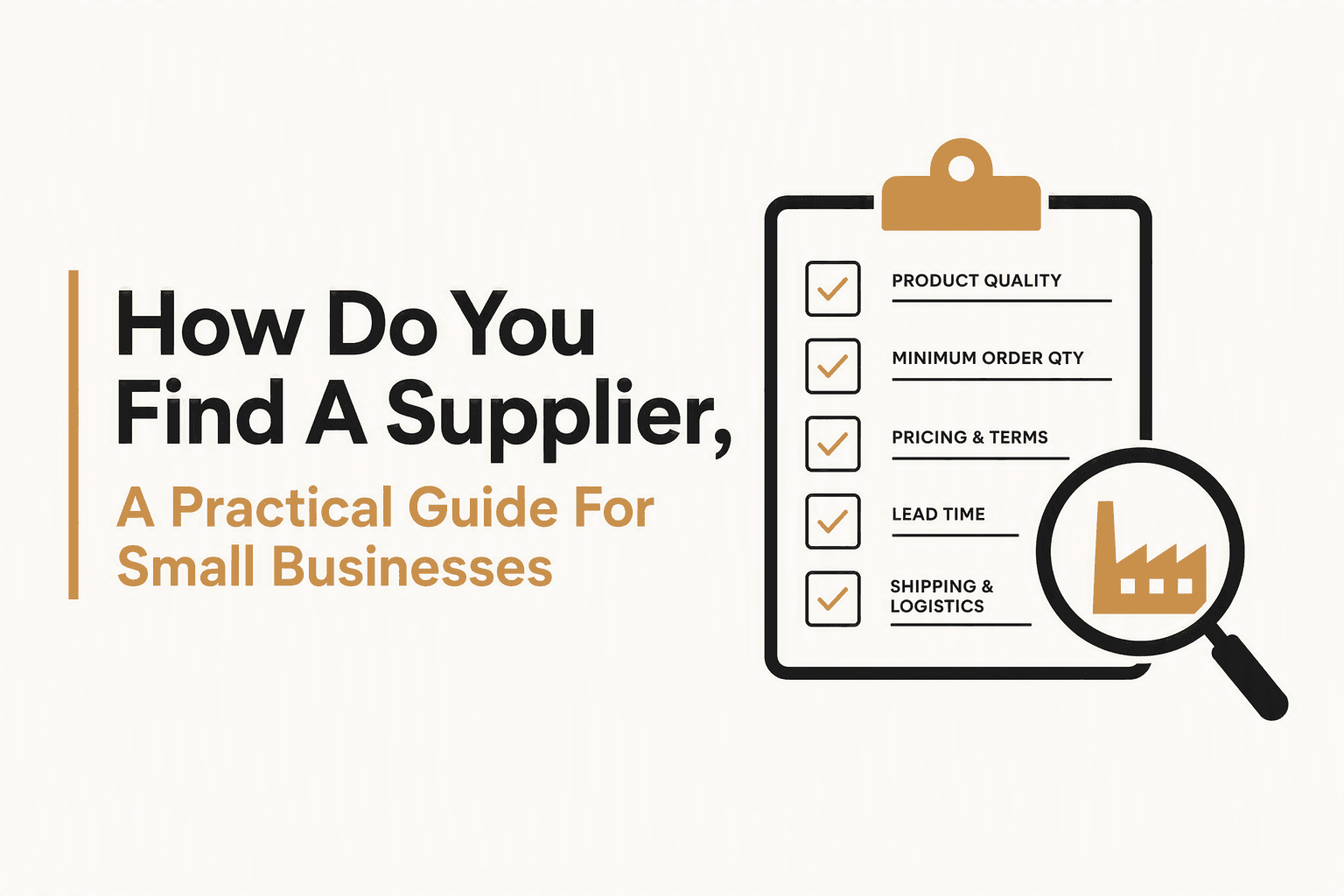
How Do You Find A Supplier, A Practical Guide For Small Businesses
Learn how do you find a supplier with a simple SOP: set requirements, search channels, email RFQs, compare quotes, verify, and place your first order.
Purpose Of Supplier Evaluation Explained, The 5 Reasons It Matters
Learn the purpose of supplier evaluation, how it works in sourcing, and how to build a simple scorecard with weighted criteria for better decisions.