
How To Find New Suppliers, A Practical Step-By-Step Sourcing Workflow
How to find new suppliers without creating new quality, delivery, or compliance risks comes down to one thing: use a repeatable workflow that turns “a name on a list” into a verified shortlist you can actually buy from.
- Start supplier discovery by locking requirements you can send and evaluate against: specs, volumes, must-not-fail risks, and target commercial terms.
- Use multiple channels (not just marketplaces), then screen fast with a simple scorecard so only the best-fit suppliers reach sampling and audits.
- Verify in sequence (documents, samples, light factory checks, then a trial order) so you catch issues before you commit real volume.
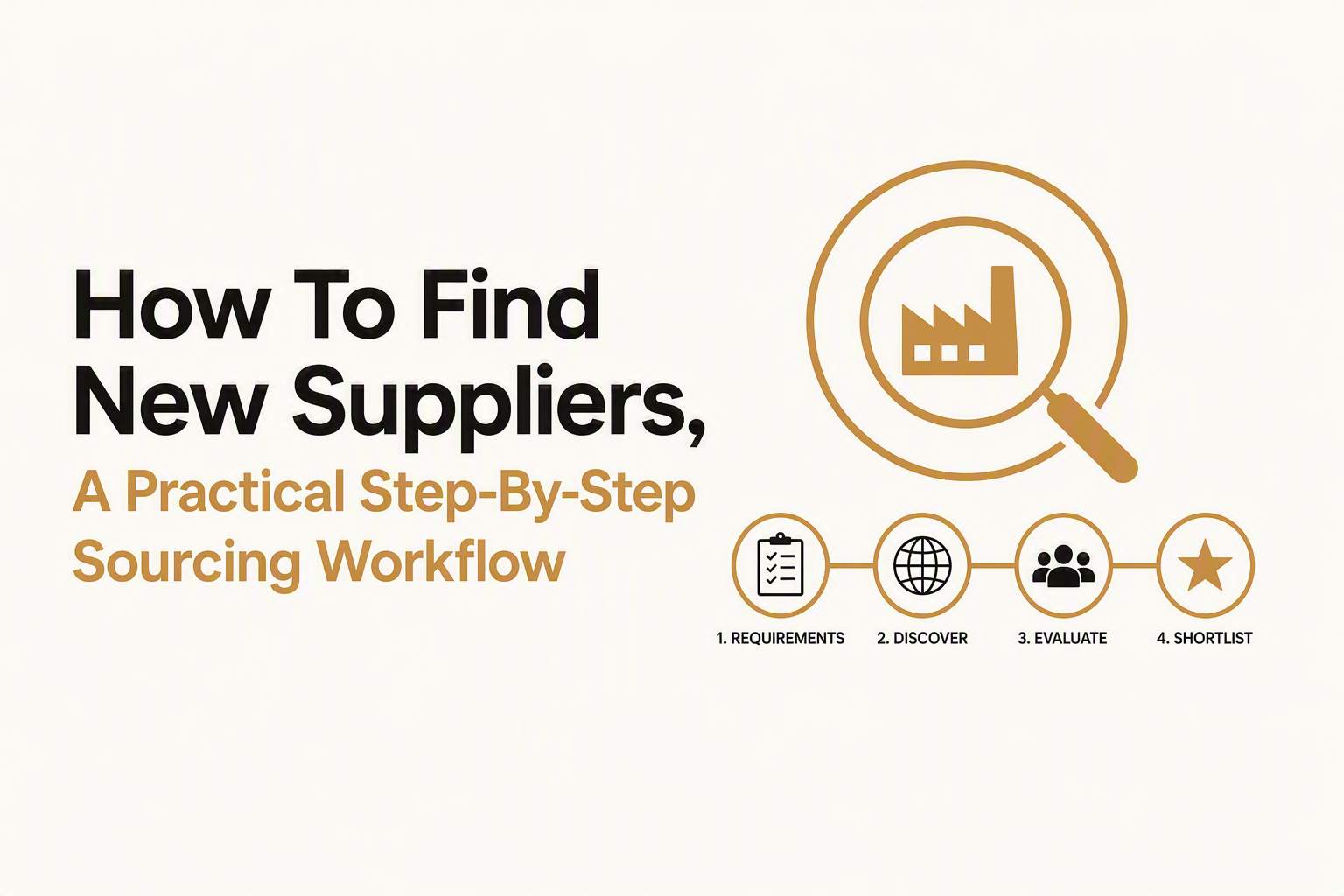
Define what you actually need before you start searching
How to find new suppliers efficiently starts with requirements that are specific enough to filter candidates and specific enough for a supplier to quote correctly.
Stage 1: Build a one-page sourcing brief (copy-ready)
- Product definition: SKU list or one “hero SKU” to quote first, with photos, drawings, dimensions, and acceptable tolerances (if you do not have drawings, define what you can measure and what is “visual standard”).
- Materials and finish: list mandatory materials and banned substitutions; include finish type and performance expectations (for example, “water-based lacquer preferred”, “no lead-based pigments”).
- Quality critical points: 5 to 10 must-not-fail checks tied to function and customer complaints (for furniture: wobble, sharp edges, veneer bubbling, joint gaps, packaging drop resistance).
- Compliance needs (only what truly applies): required product labels, testing, or documentation you must have for your market. If you are unsure, write “to be confirmed” and verify with your compliance advisor instead of guessing.
- Target volumes: forecast per month or per quarter and a ramp plan (example: “pilot 200 units, then 1,000 units/month if pass”).
- Commercial targets: target Incoterms, currency, payment terms range, and required lead time window.
Stage 2: Set your “go/no-go” constraints before you see prices
- Maximum acceptable lead time: state a number (example: “must ship within 45 days after deposit”).
- MOQ boundary: define max MOQ for pilot and for scale (example: “pilot MOQ ≤ 200 units; scale MOQ can be higher”).
- Risk you will not accept: examples include refusal to share factory address, inconsistent business identity across documents, or unwillingness to support pre-shipment inspection.
- Communication requirement: response time expectation (example: “acknowledge within 24 business hours”).
In our experience working with first-time importers, the fastest way to waste two weeks is requesting quotes without a single measurable quality requirement, then trying to reverse-engineer expectations after prices arrive.
7 reliable places to find new suppliers and when to use each
How to find new suppliers with less risk improves when you treat channels as inputs to a pipeline, not as a one-time search.
1) Industry trade shows (best for capability validation)
- Use when: you need to compare build quality, finish, and breadth of a product line in person.
- Operational check: collect 10 to 20 supplier contacts, then require each to send a post-show quote using your one-page brief within 5 business days.
- Risk control: confirm exhibitor identity matches the company issuing the quotation and invoice.
2) Referrals from trusted buyers (best for speed)
- Use when: your category is specialized and you value reliability over discovering the cheapest option.
- Operational check: ask for the referrer’s last shipment month and what the supplier is consistently good and bad at (for example, “great finishing, weak packaging”).
- Risk control: still run your own verification steps; do not treat a referral as a guarantee.
3) Import and shipment records (best for export proof)
- Use when: you need evidence a supplier actually exports your product category to your market.
- Operational check: look for repeated shipments over time, not a single spike, and check whether exported HS codes match your category.
- Risk control: treat the record as a lead, then confirm factory and product match what was shipped.
4) Online directories and B2B databases (best for longlists)
- Use when: you need to build a longlist fast across multiple countries or regions.
- Operational check: filter by location, years established, product category, and export markets, then immediately move to your screening scorecard.
- Risk control: watch for copied listings and inconsistent addresses across the web.
5) Online marketplaces (best for sampling, highest diligence needed)
- Use when: you want fast access to many suppliers and can enforce a strict verification sequence.
- Operational check: require a sample plan with cost, timeline, and packaging details before you discuss volume pricing.
- Risk control: confirm whether the seller is the manufacturer or a trading company, then decide if that is acceptable for your risk profile.
6) Sourcing agents or consultants (best for local execution)
- Use when: you cannot visit factories and need help with on-the-ground checks, sampling coordination, or negotiation.
- Operational check: request a written workflow: how they shortlist, what they verify, and how they handle QC and escalation.
- Risk control: clarify whether the agent takes supplier commissions and how conflicts are managed.
7) Your existing supplier network (best for “nearby” alternatives)
- Use when: you want a second source with similar machinery, materials, or region logistics.
- Operational check: ask current suppliers for non-competing referrals (for example, different sub-category), then verify independently.
- Risk control: do not reveal your full cost breakdown or customer list during early discovery.
If you want a practical companion framework to widen your search without losing control of verification, see how to look for suppliers, then plug leads into the scorecard below.
A simple screening scorecard to build a shortlist fast
How to find new suppliers without drowning in calls is easier when every candidate is scored the same way and only the top tier moves forward.
Stage 1: Run a 30-minute “evidence first” screen
- Identity and footprint: legal company name, physical address, website domain, and a consistent email pattern. Confirm directly with the supplier: business registration details and invoice entity.
- Category fit: does their catalog show products truly similar in construction, materials, and finish?
- Export proof: evidence of exporting (shipping history, customer markets, or export documentation examples). Confirm directly with the supplier: which markets they ship to most and typical Incoterms.
- Capacity reality check: declared monthly output plus peak-season constraints. Confirm directly with the supplier: current utilization and whether they accept new programs.
Stage 2: Use a weighted scorecard (copy and adjust weights)
Score each supplier 1 to 5 for each criterion, then multiply by weight. Require evidence for any score of 4 or 5.
- Product capability (30%): proven builds similar to your spec; ability to meet key tolerances and finishes.
- Quality system (20%): documented in-process checks, incoming material checks, and final inspection practice. Confirm directly with the supplier: what they check, when, and how defects are recorded.
- Capacity and lead time (20%): realistic lead time for your forecast, not just a one-off promise.
- Commercial fit (15%): payment terms, quotation clarity, tooling or mold policies (if applicable), and willingness to define defect criteria.
- Communication and responsiveness (15%): speed, clarity, and ability to answer technical questions without evasion.
What surprised our team was how often “cheap” quotes fell out of the top three once we scored communication and evidence quality, because unclear answers early usually become costly delays later.
Verify before you commit, samples, audits, and trial orders
How to find new suppliers you can trust requires staged verification that increases certainty in steps, not a single leap from quote to container.
Stage 1: Document and photo verification (before paying for samples)
- Ask for: recent factory photos (production lines, warehouse, QC area), product photos of similar SKUs, and packaging examples.
- Consistency check: ensure factory name, address, and branding match across documents, website, and any certificates shared.
- Clarify roles: manufacturer vs trading company and who owns production control.
Stage 2: Sampling with a pass/fail rubric
- Define “sample pass” in writing: list your 5 to 10 critical quality points and how you will measure them.
- Request a sample build sheet: materials used, finish system, hardware brand or spec, and packaging components.
- Track revisions: if the first sample fails, document the defect, the agreed correction, and the sample iteration number.
Stage 3: Light factory evaluation or third-party audit (before production)
- Minimum checks: production process flow, incoming material handling, in-process checkpoints, calibration status for key tools, and how they isolate defective parts.
- Output realism: compare claimed capacity against visible lines, staffing, and WIP (work in process).
- Confirm directly with the supplier: who signs off quality and what happens when defects exceed threshold.
Stage 4: Trial order that is designed to “break the process”
- Use a controlled SKU set: avoid too many variants on the first PO; choose the most representative SKU.
- Include a pre-shipment inspection clause: define what happens on fail (rework, re-inspection, or partial shipment).
- Measure outcomes: defect rate at receipt, packaging damage rate, on-time shipment, and responsiveness to corrective actions.
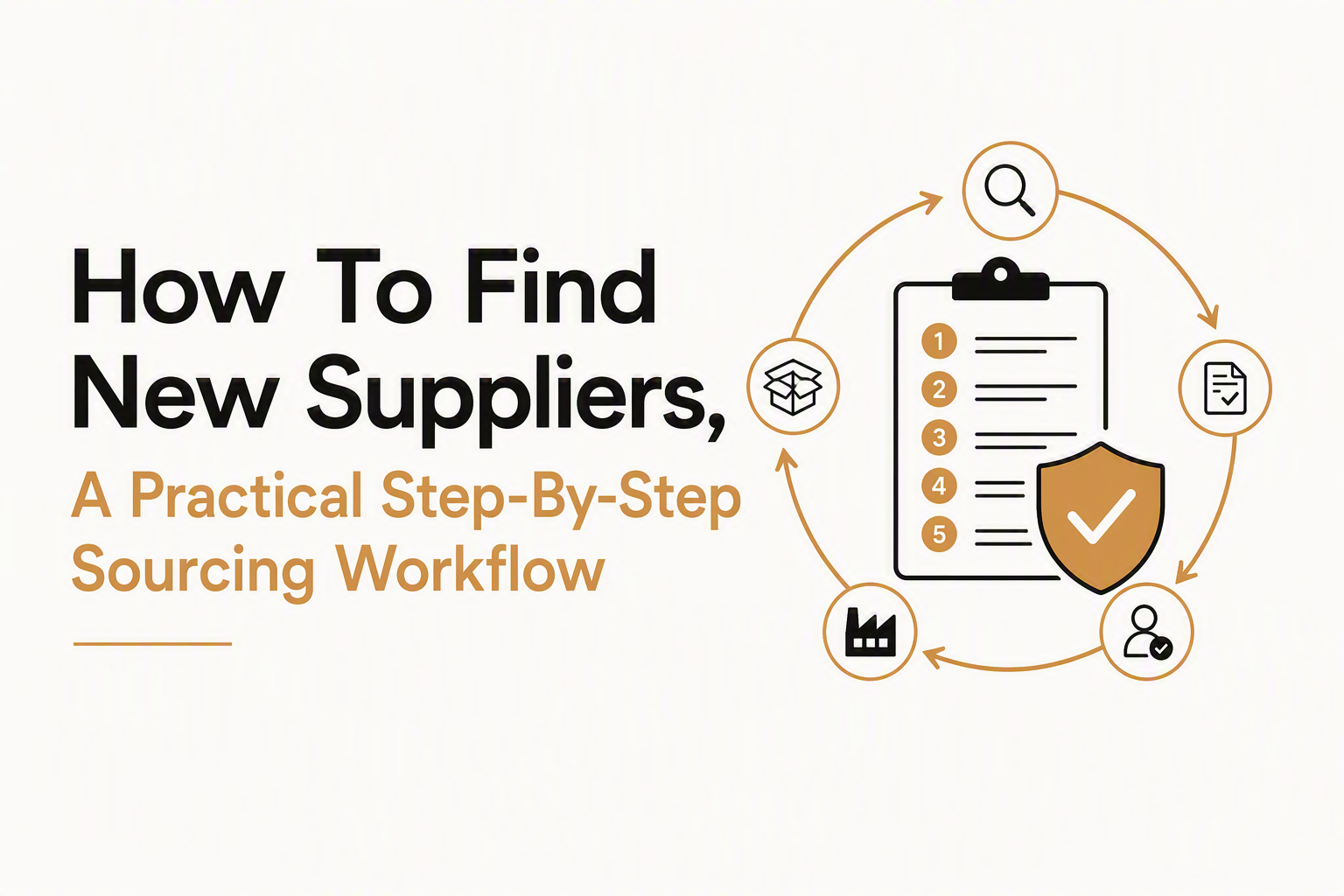
| Verification step | Goal | What you need in hand | Stop conditions |
|---|---|---|---|
| Document and identity check | Confirm the supplier is real and consistent | Legal name, address, quotation entity, basic production photos | Refuses address, inconsistent identities, evasive answers |
| Sample with pass/fail rubric | Validate build quality and spec adherence | Measured results against your critical checks, sample build sheet | Repeated failures, untracked changes, substitutions without approval |
| Light audit or factory evaluation | Validate process and QC controls | Process flow notes, QC checkpoints, corrective action approach | No defined QC, no isolation of defects, capacity claims do not match reality |
| Trial order + inspection | Validate execution under real conditions | Inspection report, on-time shipment data, CAPA actions | Fails inspection without effective rework, chronic delays, poor issue closure |
Common mistakes when finding new suppliers and how to avoid them
How to find new suppliers successfully is often about avoiding predictable errors that turn “new source” into “new headache.”
Mistake 1: Treating the lowest price as the best supplier
- What to do instead: compare quotes only after you standardize assumptions: materials, finish, packaging, lead time, and payment terms.
- Operational check: ask each supplier to quote the same Incoterm and packaging spec, then note any exceptions explicitly.
Mistake 2: Skipping supplier research before outreach
- What to do instead: collect basic evidence (products, export activity, and customer markets) before the first call, then prepare 10 specific questions.
- Operational check: maintain a single record per supplier that stores what you learned and what is still unverified.
For a deeper explanation of what “research” should include and the risks it prevents, use research suppliers as your baseline, then apply the checklist in the last section.
Mistake 3: Not defining QC expectations until after the PO
- What to do instead: attach a simple quality appendix to the PO: critical defects, major defects, packaging requirements, and inspection timing.
- Operational check: require pre-production confirmation of materials and finish samples (physical or approved photos with reference codes).
Mistake 4: Falling for “fake factory” signals
- Red flags: refusal to do a video walkthrough, generic factory photos that appear elsewhere online, no fixed address, or pressure to move payments quickly.
- Operational check: request a live video call where they show the entrance signage, key machines, and current production order sheets with sensitive details covered.
Mistake 5: Overloading the first order
- What to do instead: design a trial order that proves one production line, one material set, and one packaging method before expanding variants.
- Operational check: set a review gate after receipt: only move to repeat order if delivery, quality, and corrective actions meet your thresholds.
How to find new suppliers using a reusable supplier research checklist
How to find new suppliers consistently becomes much easier when every team member uses the same checks at discovery, screening, verification, and onboarding.
Stage A: Discovery and longlist (goal: 20 to 40 leads)
- Record the source channel: trade show, referral, database, marketplace, agent, or shipment record.
- Capture supplier identifiers: legal name (as shown on documents), website, email domain, phone, and full address. Confirm directly with the supplier: invoice entity and bank beneficiary name.
- Capture category evidence: links or photos showing similar products, not just generic catalog pages.
- Note initial claims as unverified: lead time, MOQ, capacity, certifications, export markets. (Treat as “claimed” until proven.)
Stage B: Fast screening (goal: shortlist 5 to 8)
- Run the 30-minute evidence screen: identity consistency, category fit, export proof, capacity reality check.
- Send a standardized RFQ package: your one-page sourcing brief + quote template (unit price, tooling if any, MOQ, lead time, payment terms, packaging spec).
- Score with the weighted scorecard: capability, quality system, capacity and lead time, commercial fit, communication.
- Drop criteria (hard stops): cannot answer technical questions, refuses verification steps, or repeatedly changes quoted assumptions without noting them.
Stage C: Verification (goal: 2 to 3 “approved for trial”)
- Identity verification: business registration and address match the quotation entity. Confirm directly with the supplier: factory address if manufacturing is subcontracted.
- Sampling plan: sample cost, timeline, what is refundable (if anything), and what “pass” means.
- Quality alignment: agree on defect definitions and inspection timing (pre-production, during production, pre-shipment).
- Process check: light audit or third-party evaluation focused on your risk points (materials control, finish process, in-process QC, packaging).
Stage D: Trial order and onboarding (goal: 1 to 2 repeatable suppliers)
- PO discipline: include approved sample reference, packaging spec, inspection right, and change-control rule (no substitutions without written approval).
- Inspection and acceptance: define what happens on fail (rework, replacement, credit), and who pays re-inspection.
- Corrective action loop: require root cause + countermeasure for any major defect, then verify on the next shipment.
- Post-trial review: rate supplier on on-time shipment, defect trends, communication quality, and issue closure speed.
After running this workflow across multiple categories, the pattern was clear: teams that write down “unverified vs verified” for every claim make faster decisions and avoid last-minute surprises during production.
FAQ
If you are sourcing in Vietnam and want a structured way to discover candidates and track verification steps, Ant Sourcing can help you explore a Vietnam supplier network and quality control workflows so your team turns research into a clean, verified shortlist. You can also adapt the checklist above into an internal template and use it on every new category before you scale.
How To Find The Best Suppliers, A Practical Workflow and Scorecard
Learn how to find the best suppliers using a repeatable checklist, vetting steps, and a simple weighted scorecard for objective comparison.
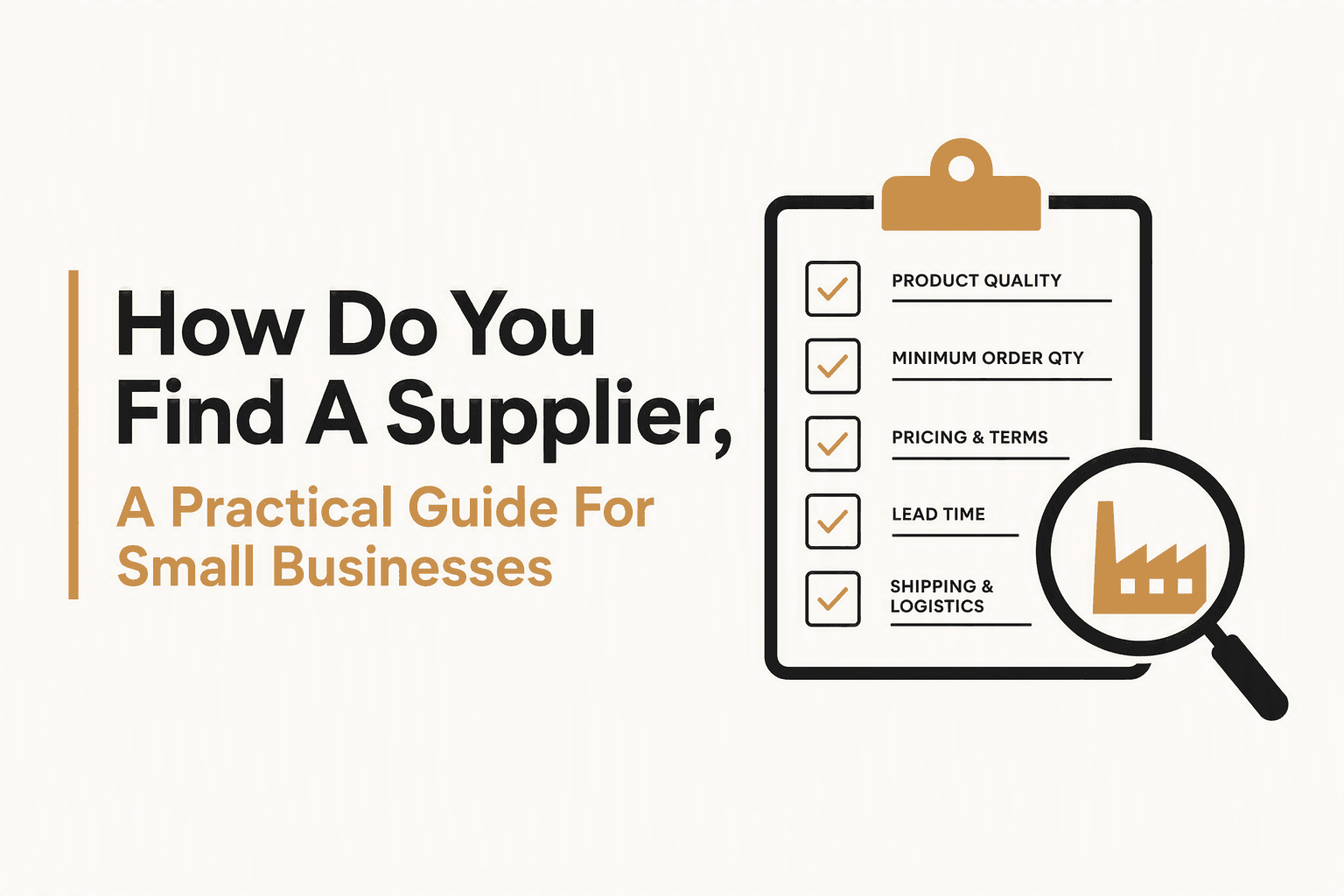
How Do You Find A Supplier, A Practical Guide For Small Businesses
Learn how do you find a supplier with a simple SOP: set requirements, search channels, email RFQs, compare quotes, verify, and place your first order.
Purpose Of Supplier Evaluation Explained, The 5 Reasons It Matters
Learn the purpose of supplier evaluation, how it works in sourcing, and how to build a simple scorecard with weighted criteria for better decisions.