
How To Find A Product Supplier Without Getting Burned
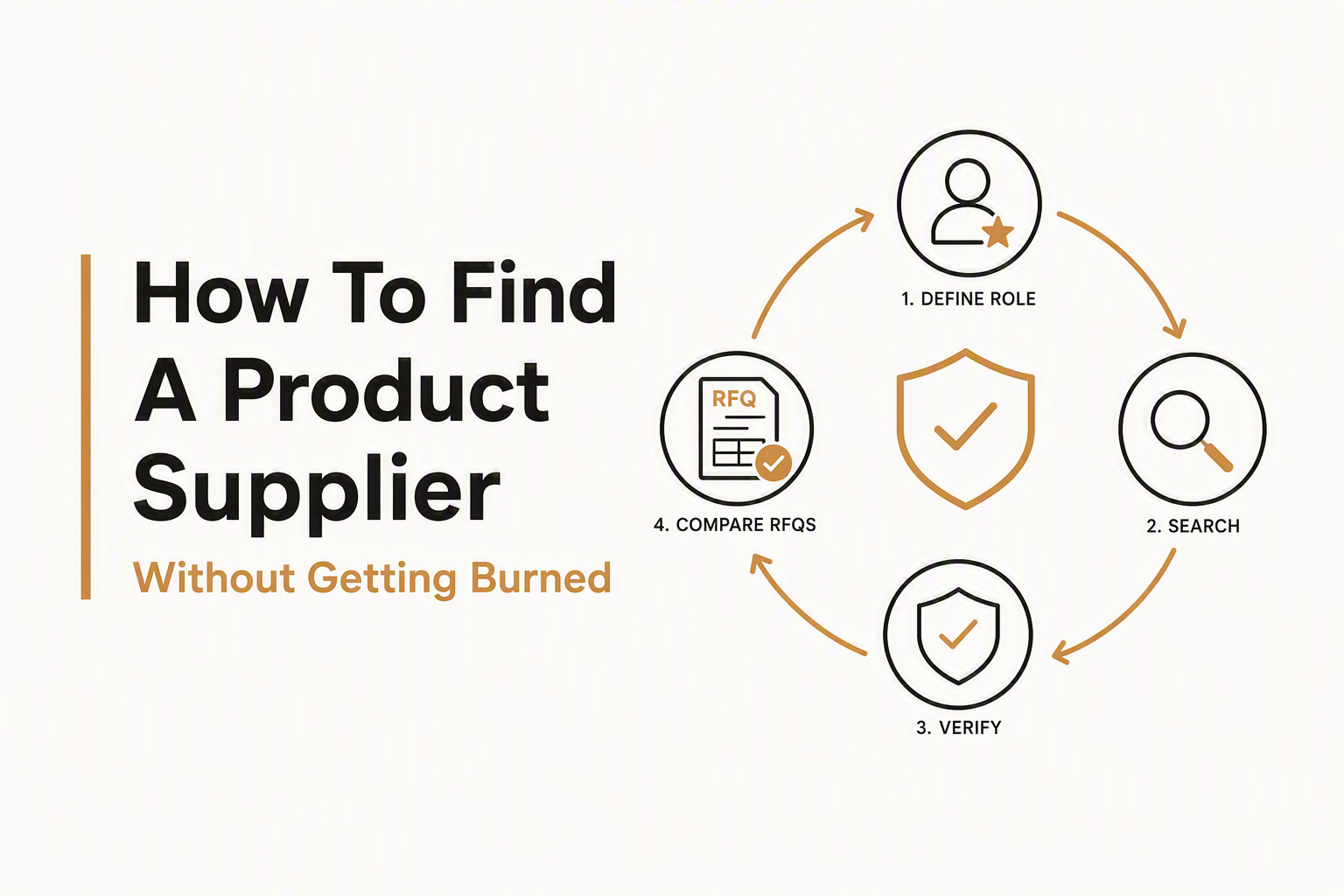
How to find a product supplier safely comes down to a repeatable workflow: pick the right supplier type, build a shortlist using structured searches, verify legitimacy before payment, and compare quotes using landed-cost decision rules.
- Choose the supplier type first (manufacturer vs wholesaler vs distributor vs trading company) so you search the right channels and avoid mismatched MOQs.
- Use a structured search protocol (Google operators, HS codes, directories, LinkedIn) and score candidates to build a reliable shortlist.
- Verify before you pay with a step-by-step legitimacy checklist (company registration, address proof, samples, payment safety, and red-flag screening).
The Mission and the Stack
How to find a product supplier without getting burned means executing a documented sourcing SOP that produces 5 to 10 verified supplier candidates, 2 to 3 validated finalists, and one clear “go” decision based on risk and landed cost, not vibes.
The stack (ingredients) to deploy this workflow:
- A clear product spec (even a one-page brief) with materials, dimensions, compliance needs, and target price
- Search channels (Google, directories, trade show exhibitor lists, LinkedIn)
- A tracking sheet (Airtable, Google Sheets, Notion) for scoring and audit notes
- Verification tools (company registry sites, WHOIS/domain checks, video calls, sample orders)
- Optional workflow engine for organizing supplier research and QC steps (mentioned in the CTA)
Prerequisites (Prepare Before You Search)
How to find a product supplier quickly is easiest when you prepare five inputs upfront, because suppliers respond faster and you can compare quotes apples-to-apples.
- Product definition: a photo + a short description is enough for resale, but for custom you need a simple spec sheet.
- Target order profile: expected monthly volume, desired MOQ range, and a realistic first order size.
- Quality bar: 3 to 7 must-have checks (for example: material grade, finish, packaging drop test requirement, allowed defect rate).
- Compliance needs: country of import, labeling rules, and any product-specific requirements (for wood products this might include phytosanitary documentation; for electronics it might include safety certifications).
- Commercial constraints: target unit price, maximum lead time, and preferred Incoterms (EXW, FOB, CIF) for quoting.
Minimum viable spec (MVSpec) template you can paste into your RFQ:
- Product name + use case (example: “Rubberwood dining chair for mid-market retail”)
- Materials (example: rubberwood frame, oak veneer optional)
- Size (L x W x H, weight)
- Finish and color (stain, paint system, sheen)
- Packaging (flat-pack vs assembled; carton dimensions if known)
- Quantity (trial order + 90-day forecast)
- Delivery term (FOB [port] preferred)
In our experience working with first-time importers, the biggest time sink is not “finding suppliers”, it is rewriting unclear requests after you already started outreach, so we treat this MVSpec as mandatory before any search.
Define Supplier Roles So You Search the Right Channel
How to find a product supplier efficiently starts with picking the right supplier role for your business model, because each role has different MOQs, pricing, and control over quality and customization.
Manufacturer
Action: Choose a manufacturer when you need custom design, private label, or stable long-term supply.
Outcome: Better control over materials, production methods, and consistency, but usually higher MOQs and longer lead times.
- Best for: custom products, product improvements, scaling a proven SKU
- Watch-outs: factory capacity limits, QC maturity, tooling costs, and communication gaps
Wholesaler
Action: Choose a wholesaler when you want to resell existing items with lower friction.
Outcome: Faster starting point, smaller MOQs than factories, but less customization and sometimes less transparency on origin.
- Best for: resale, testing demand, fast assortment building
- Watch-outs: inconsistent stock, mixed batches, limited traceability
Distributor
Action: Choose a distributor when you want authorized access to a brand or line and predictable availability.
Outcome: Clearer terms and support, often stronger documentation, but typically higher pricing than buying direct.
- Best for: branded goods, regulated categories, domestic replenishment
- Watch-outs: territory restrictions, MAP pricing, channel conflict
Trading company (sourcing intermediary)
Action: Choose a trading company when you need coordination across multiple factories or want a single contracting entity.
Outcome: Simplified coordination, but you must validate who actually produces the goods and who owns quality responsibility.
- Best for: multi-SKU bundles, mixed materials, early-stage importing without a team
- Watch-outs: margin layering, unclear factory identity, “bait-and-switch” factories
Decision shortcut: If you need customization, start closer to the factory. If you need speed and low MOQ, start with wholesalers or distributors. If you need coordination, a trading company can work, but only with tight verification and QC accountability.
Choose the Best Sourcing Path for Resale, Bulk Buying, or Custom Products
How to find a product supplier depends on whether you are reselling, bulk buying an existing item, or developing something custom, because each path has different search channels and “success criteria”.
Path A: Resale (fast test, lower commitment)
Action: Source from wholesalers, distributors, closeout and liquidation sellers, and local importers with stock.
Outcome: You can validate demand quickly, learn what breaks in shipping, and collect customer feedback before committing to factory MOQs.
Channel checklist:
- Domestic wholesalers in your category (often easier returns and faster replenishment)
- Authorized distributors if you need brand legitimacy and documents
- Closeout and liquidation for opportunistic margins (only if you can inspect condition and batch consistency)
Path B: Bulk buying (same product, better pricing)
Action: Start with importers and trading companies, then transition to the factory after you have stable volume.
Outcome: Lower unit cost over time without taking early-stage manufacturing risk.
Transition trigger: Move toward the manufacturer when your reorders become predictable and you can meet the factory’s MOQ without tying up cash.
Path C: Custom product (private label, design changes, differentiation)
Action: Identify 5 to 8 factories that already make similar products and can prove material and process competence.
Outcome: Higher differentiation and a defensible product, at the cost of longer development cycles (samples, revisions, approvals).
We initially assumed “manufacturer-first” was always cheaper, but after running multiple RFQ rounds the pattern was clear: for small first orders, intermediaries often win on total cost once you include sample iterations, mixed-SKU consolidation, and fewer operational mistakes.
Run a Repeatable Online Search Workflow Instead of Random Directory Browsing
How to find a product supplier online without wasting days is to run a repeatable search protocol that produces a comparable shortlist and forces you to capture evidence for each candidate.
Step 1: Translate your product into search language (keywords + codes)
Action: Convert your product into 5 to 10 “search phrases” and 1 to 2 standardized codes.
Outcome: You discover suppliers that do not rank for your exact product name, and you avoid browsing irrelevant categories.
- Keyword set: product name + material + process + region (example: “acacia wood cabinet manufacturer Vietnam”)
- HS codes: helpful for import/export databases and trade activity searches (use the U.S. International Trade Commission HTS search as a starting point)
- NAICS: helpful for US-based supplier discovery and industry lists (see NAICS)
Step 2: Use Google operators to find real supplier footprints
Action: Search for “evidence pages” that indicate a business actually sells B2B, not a copied catalog.
Outcome: Higher-quality leads than generic marketplace browsing.
Operator recipes (copy/paste):
- Factory signals:
("factory" OR "manufacturer") "[product]" "OEM" "MOQ" - Catalog PDFs:
filetype:pdf "[product]" (catalog OR brochure) (MOQ OR "lead time") - Contact pages:
"[product]" ("sales@" OR "export@") (MOQ OR "FOB") - Exclude noise: add
-retail -amazon -etsy -shopto reduce consumer results
Step 3: Layer directories and exhibitor lists, but treat them as lead sources
Action: Use directories and trade show exhibitor lists to expand coverage, then validate each lead off-directory.
Outcome: You avoid treating a listing as proof of legitimacy.
- Trade shows: exhibitor lists are often better than random directories because suppliers disclose categories and contact roles.
- Industry associations: member directories can be useful for domestic distributors.
Step 4: Prospect on LinkedIn using role-based filters
Action: Search for companies, then find “Export Sales”, “International Sales”, “Business Development”, or “Merchandising” contacts.
Outcome: Faster routing to a decision-maker and less inbox dead-end.
Quick LinkedIn workflow:
- Find 30 companies by keyword + region
- For each company, capture 1 to 2 contacts plus email pattern clues
- Tag each lead by supplier role (manufacturer/wholesaler/distributor/trading)
Step 5: Score candidates so you can compare objectively
Action: Assign a simple 0 to 2 score across six criteria and eliminate weak fits fast.
Outcome: A shortlist you can defend to a cofounder, manager, or investor.
- Role fit: matches your resale vs custom need
- Evidence of B2B exports: trade activity, clear Incoterms, documented lead times
- Product match: similar items in portfolio, not “we can do everything”
- MOQ fit: realistic for your trial order
- Responsiveness: answers specific questions, not generic PDFs only
- Risk signals: identity, address, payment terms, consistency
How to find a product supplier and Verify Legitimacy Before You Send Money
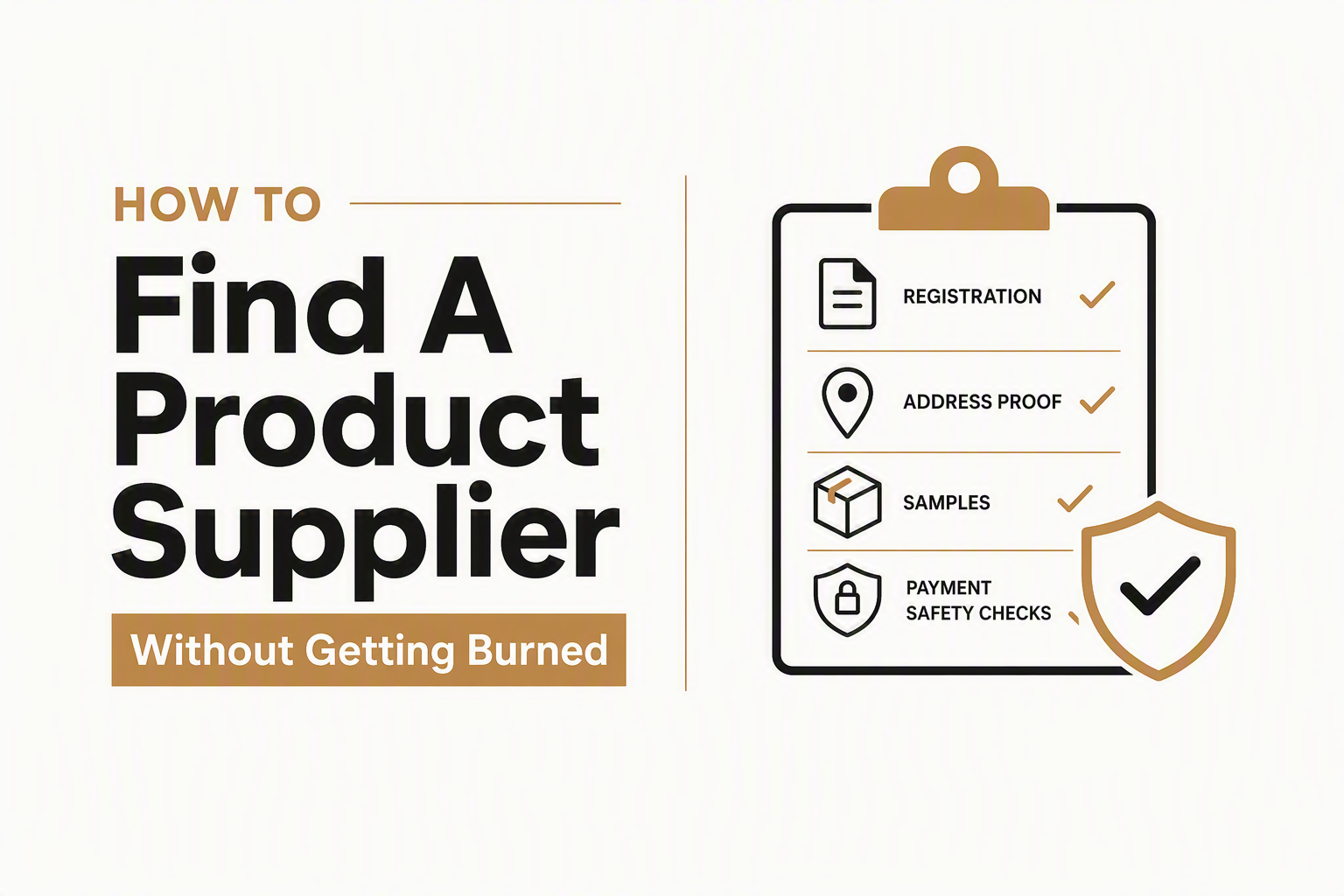
How to find a product supplier you can actually pay safely requires a verification checklist that proves legal existence, operational capability, and payment-risk controls before you place a deposit.
Step 1: Validate business identity and registration
Action: Ask for the legal company name (exact spelling), registration number, and address, then cross-check on the relevant government registry.
Outcome: You confirm the entity exists and the name matches the bank account and documents.
- Registration certificate details match website and invoices
- Company name on invoice matches company name on bank account
- Address format is consistent across documents
Step 2: Verify the physical operation (not just an email identity)
Action: Request a live video walkthrough with timestamped views of production, warehouse, or office signage, plus a shipping area if relevant.
Outcome: You reduce the odds of dealing with a broker pretending to be a factory, or a fake entity using stolen photos.
- Ask them to show: entrance signage, work-in-progress, finished goods, QC station, packing
- Ask 2 to 3 “prove you are there” prompts (example: show today’s newspaper or a phone clock, then walk to the loading bay)
Step 3: Check digital trust signals (domain, email, consistency)
Action: Compare the company’s website domain age, email domain, and contact details consistency.
Outcome: You catch common impersonation patterns.
- Email domain: company domain is lower risk than free email
- WHOIS/domain age: a brand-new domain is not proof of fraud, but it raises the verification bar
- Document consistency: logos, addresses, and phone numbers match across quote, invoice, and website
Step 4: Demand a sample protocol, not just “sample available”
Action: Order samples with a written acceptance checklist and clear revision rules.
Outcome: You validate build quality and supplier follow-through before committing to a production run.
- Define what “pass” looks like (finish, dimensions tolerance, function test)
- Ask for production samples if possible, not only showroom samples
- Keep photos and notes in your supplier record for future reorders
Step 5: Reduce payment risk with safer terms
Action: Use payment methods and milestones that limit loss if something goes wrong.
Outcome: You prevent the most expensive failure mode: paying and receiving nothing, or receiving unusable goods.
- Start with smaller trial orders when feasible
- Use escrow or trade assurance where appropriate
- For bank transfers, only pay to an account in the verified legal company name
- Link payments to milestones (sample approval, pre-shipment inspection)
Golden rule: Any supplier can look legitimate on a catalog page, so your protocol should treat evidence (registration match, address proof, sample performance, and payment controls) as the real qualification gate.
Common pitfall: Rushing into a deposit because a supplier offers a time-limited discount; urgency is a classic pressure lever in fraud and in low-quality operations.
Reverse-Source Existing Products and Big Brands Back to Their Factory
How to find a product supplier for an existing product often works best in reverse, by tracing real goods back to the producer using packaging clues, import records, and trademark data.
Method 1: Start with physical evidence (labels, cartons, compliance marks)
Action: Collect high-resolution photos of product labels, carton markings, manuals, and any compliance labels.
Outcome: You uncover the legal entity name, origin, batch codes, or factory hints that do not appear on marketing listings.
- Search exact phrases from labels in quotes on Google
- Search the address or importer name if listed
- Look for model numbers that match datasheets or export catalogs
Method 2: Use import records and shipment history as a reality check
Action: Search for the importer/brand and product category in import-data tools or public records where available.
Outcome: You identify likely factories or trading companies that already ship your product category to your target market.
What surprised our team was how often a “brand-looking” product traced back to a small set of repeat exporters once we searched by consistent product descriptions and codes, which instantly narrowed the field versus starting from a blank Google search.
Method 3: Cross-check trademark and company relationships
Action: Search trademark databases for brand owners and related entities, then map those entities to importers and suppliers.
Outcome: You separate brand owners, authorized distributors, and actual producers.
- Search the brand name + “owner” + country
- Look for parent companies and licensees that may appear on packaging
Compare Quotes, MOQ, Samples, and Landed Cost With Clear Decision Rules
How to find a product supplier you can confidently choose requires comparing quotes with decision rules that include landed cost, lead time, and quality risk, not just unit price.
Step 1: Send a structured RFQ that forces comparable answers
Action: Use one RFQ template and ask for the same fields from every supplier.
Outcome: Side-by-side comparisons become possible.
RFQ fields to require:
- Unit price by quantity tier (example: 500, 1,000, 3,000 units)
- MOQ and what drives it (material MOQ, color MOQ, packaging MOQ)
- Lead time for samples and mass production
- Payment terms (deposit %, balance trigger)
- Incoterms and port
- Packaging details and carton sizes (for shipping calculation)
- Quality process summary (incoming, in-process, final inspection)
Step 2: Calculate landed cost using a simple formula
Action: Normalize quotes into landed cost per unit with the same assumptions.
Outcome: The “cheapest” quote stops being misleading.
Landed cost per unit (starter formula):
- Product cost (unit price x quantity)
- + Packaging or tooling amortized (if applicable)
- + Freight and insurance (estimate using carton CBM and route)
- + Duties and fees (varies by category and country)
- + Inspection and rework allowance (budget for verification)
Step 3: Use decision rules to pick finalists
Action: Apply explicit “advance or drop” rules so you do not get stuck in endless quote rounds.
Outcome: You move from 10 leads to 2 to 3 finalists with reasons documented.
Example decision rules (edit to fit your risk tolerance):
- Drop if they will not provide legal company details that match payment details.
- Drop if they refuse samples or cannot explain defects and tolerances.
- Advance if landed cost is within your target and they meet lead-time constraints.
- Advance if communication is specific (they answer questions, not just send a catalog).
Step 4: Lock quality expectations before the first production run
Action: Document acceptance criteria, packaging requirements, and an inspection checkpoint before shipment.
Outcome: Fewer disputes and fewer “we assumed” problems.
- Attach sample photos as the reference standard
- Define what happens if defects exceed the threshold (rework, discount, remake)
| Stage | What you decide | Evidence to collect | Drop if |
|---|---|---|---|
| Role selection | Manufacturer vs wholesaler vs distributor vs trading | MOQ expectations, customization needs, lead time tolerance | Role cannot meet your order profile |
| Shortlist | 10 to 15 candidates | Portfolio match, contact role, export capability signals | “We can make anything” with no proof |
| Verification | 5 to 8 validated suppliers | Registration match, address proof, video walkthrough, sample plan | Payment name mismatch or identity inconsistency |
| RFQ comparison | 2 to 3 finalists | Comparable quote fields, landed cost model, lead time, terms | Hidden costs, vague terms, or refusal to clarify |
| First order | One supplier to trial | Signed PO terms, QC checklist, inspection checkpoint | No agreement on acceptance criteria |
FAQ for beginners sourcing suppliers
If you have built a shortlist and want a more organized way to research suppliers, document verification evidence, and operationalize quality control across Vietnam, Ant Sourcing can help you turn supplier vetting and QC into a repeatable workflow using its VN supply network and quality control platform. Book a demo when you are ready to move from “finding names” to making supplier decisions with documented proof.
How To Find The Best Suppliers, A Practical Workflow and Scorecard
Learn how to find the best suppliers using a repeatable checklist, vetting steps, and a simple weighted scorecard for objective comparison.
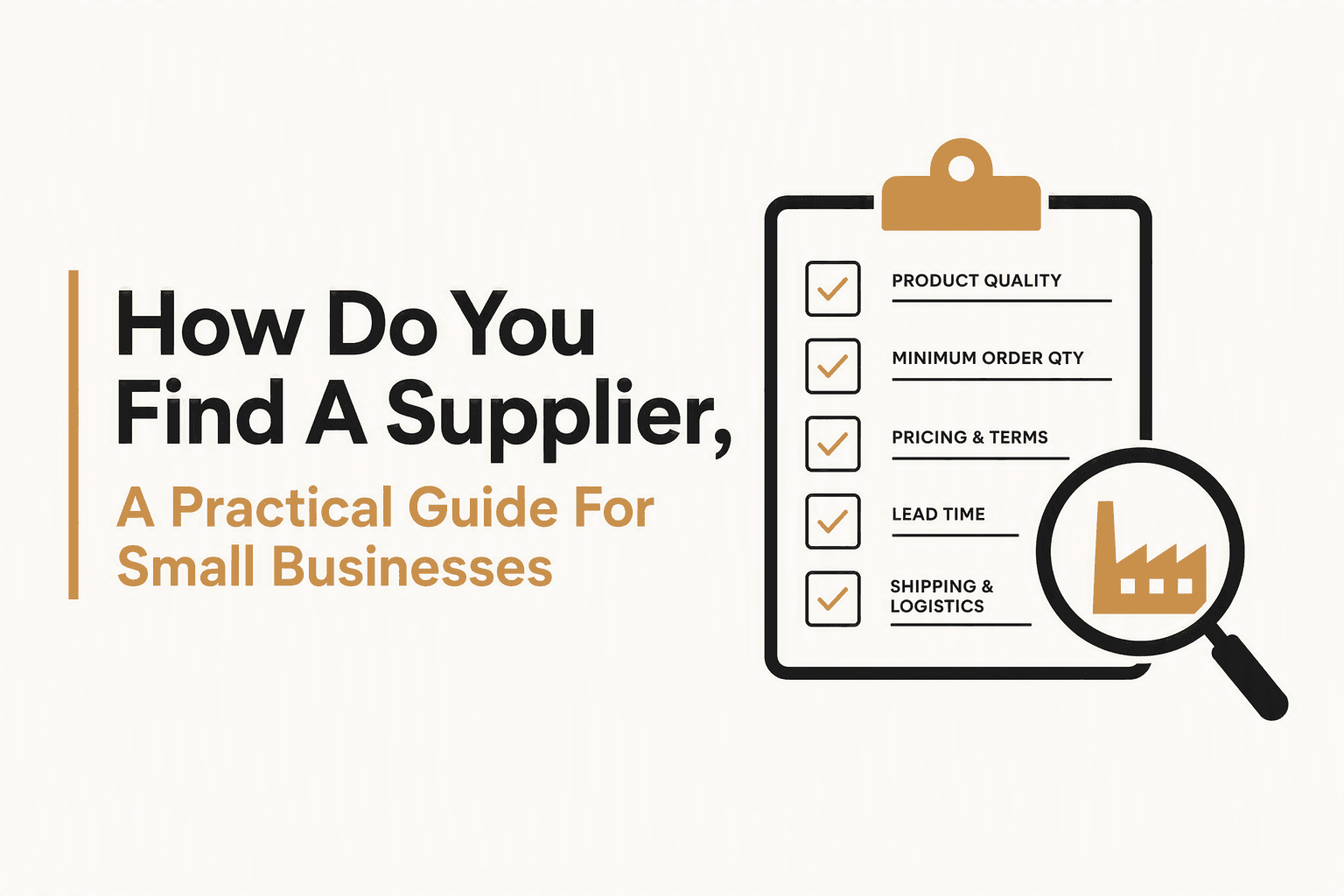
How Do You Find A Supplier, A Practical Guide For Small Businesses
Learn how do you find a supplier with a simple SOP: set requirements, search channels, email RFQs, compare quotes, verify, and place your first order.
Purpose Of Supplier Evaluation Explained, The 5 Reasons It Matters
Learn the purpose of supplier evaluation, how it works in sourcing, and how to build a simple scorecard with weighted criteria for better decisions.